- Dec 5, 2025
- 7 min read
The Future of the Hidden Blade:
Evolving Gaming's Most Iconic Weapon
Written by Adam
Legacy
Since the release of Assassin’s Creed in 2007, the hidden blade has become synonymous with the franchise and one of gaming's most recognisable and iconic weapons. Throughout the series' 18-year history, Ubisoft has done a phenomenal job of updating the hidden blade, both in terms of gameplay and its connection to both the lore and the settings in which the games take place. However, I would like to discuss the future and the limitations of the hidden blade, and what I would like to see from arguably the series' most distinct feature.
The hidden blade’s presence in its first appearance was noticeably limited. While still being Altair’s most important tool, it could only be used in assassinating unaware enemies and as a one-shot counter during combat. This is understandable; it was the first game in the franchise, and much of the series had yet to be fleshed out.
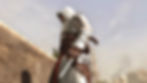
Altair’s in-game Hidden Blade - Ubisoft
Even so, I consider it the peak of the Hidden Blade’s inclusion in the series so far. Let me explain. It was exactly what it needed to be, no more, no less. But as with any sequel, Assassin’s Creed II had to innovate. It was only with the advent of AC2 that we saw the gameplay potential and the symbolic meaning of the blade start to take shape. I have no problem with this; the game needed to build upon the framework its predecessor established, and it did so admirably.
I have always loved that the original hidden blade requires a sacrifice to wield it. As someone who values dedication and commitment, this resonates with me. But I also understand that it would be a pain in the ass to be missing a finger, and I think it was clever of the devs to kill two birds with one stone and retroactively have Altair come up with a solution to the missing ring finger, and expand the lore at the same time.
Limitations
AC2 also vastly improved the functionality of the blade. The added tools, like the hidden gun and poison blades, are all great additions. But it’s the ability to use the blades in combat that irks somewhat. I don’t dislike the hidden blade combat per se, it’s the way it’s presented that rubs me the wrong way. With every attack Ezio throws out, the blades make contact with the enemies’ weapons. Now, realistically, the blades would not be able to withstand the punishment. They are not designed for open combat and would likely chip, snap, or be blunted by the constant barrage.
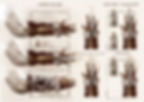
Concept art for Ezio’s Hidden Blade - Ubisoft
This brings me back to the use of the hidden blade in AC1. At no point does Altair’s blade make contact with a weapon. Altair evades the attack and then goes in for the kill. However, in the Ezio trilogy, Ezio would block attacks using his bracer. It’s a good way to get his arm snapped, especially if the blow was from a heavy axe that brutes happen to wield.
“But Adam,” I hear you say: It’s a game, it doesn’t have to be realistic!” And to that, I’d reply: There are some things that Assassin’s Creed should take a realistic approach to, and I believe one of those aspects is combat.
By the time Assassin’s Creed III and Assassin’s Creed IV: Black Flag rolled around, the system had been tweaked a little. No longer would Connor and Edward's hidden blades make contact with enemy weapons, but they would strike the unprotected parts of the body. Credit where credit is due, this was changed for the better. However, the animations are maddeningly slow, which is nonsensical. Think about it: the hidden blades on the wrist are the smallest and most easily accessible weapons in an assassin's arsenal, so it stands to reason that they would be the fastest ones. This made fighting with the hidden blade frustratingly infuriating, and gave credence to the “counter to win” complaint that everyone had about the Ezio games for some reason.

Concept art of Connor’s Hidden Blade - Ubisoft
The hidden blade is iconic, but it’s also pretty limited. Honestly, there’s just so much you can do, animation-wise, with something stuck on your wrist. Perhaps that’s why hidden blade combat was dropped after Black Flag. Personally, I didn’t mind it at all—especially in Assassin’s Creed Odyssey. In fact, I enjoy how the absence lets the game try new things. It was a breath of fresh air. That’s also the reason I love Shao Jun’s hidden footblade: it throws the door wide open for all kinds of new animations you’d never get with the classic wrist blade.
With the series’ latest release, Assassin’s Creed Shadows, I feel that the development of the hidden blade has plateaued. Borrowing the pivot blade from Assassin’s Creed III, Naoe can dual-wield a tanto and use the hidden blade as a standard knife. This is great, but it’s nothing we haven’t seen before. That’s why I’d like to see a complete overhaul of the hidden blade and the combat system to support it.
The Future
As the baseline for this combat, I will be borrowing the heavy and light attacks of the RPG system, as I believe it would work well for what I’m going for. The main draw of this system is the fact that players will be able to target individual body parts of the enemies, which would allow players to control the flow of a fight far more than any other Assassin’s Creed game before it. Similar in nature to Assassin’s Creed Valhalla's weak point attacks, but far more in-depth. For example, if you find spear enemies annoying, simply cut off their arms, therefore not allowing them to use the spear. Of course, this would mean there would be multiple different varieties of enemies that would carry at least two weapons on their person in order to make sure that fights wouldn’t become too easy.

Weak points in Assassin's Creed Valhalla - Gamer Guides - Ubisoft
Further tying this to the lore, I’d add a new type of Eagle Vision, one that allows the protagonist to see the weaknesses of enemies in real time. Furthermore, I’d adopt the armour breakage system from Shadows but tweak it slightly, so that instead of removing the enemy's armour entirely, you can systematically remove pieces of it depending on the body part you wish to target.
Now, onto the meat and potatoes of this article, the hidden blade. Ubisoft has done an excellent job when it comes to acknowledging both stealth and combat players, and I wanted to continue that, so I’d like to add a first for the series: a fully customisable hidden blade. Brace yourselves, it’s about to become real nerdy! Before we get started on the nerdy stuff, I’d like to establish that this system will allow for visual customisation but that’s not the focus of this article.
To put it simply, players would have access to a wide variety of blade profiles that make sense for either stealth and combat, or maybe something in between. Each type would have a set of attributes, .eg, sharpness, weight, balance, etc, that will determine its effectiveness in the two play styles. For example, a heavier, thicker blade would be able to withstand blows from other weapons, while a light, thinner one would excel in stealth but be less effective in combat. It’s basically another way to recontextualise the two character archetypes of both Yasuke and Naoe within a single character.
I would expect the hidden blade to follow the pattern established by Shadows and AC3, in which the setting and culture of the game influence the profile. So for Hexe, Assassin’s Creed’s next major release, I’d expect the blade to be profiled similar to a Messer or a Seax, although the latter is more associated with the Vikings themselves than the Germanic people. Within these two blade categories, there are multiple variations, and nothing is set in stone, since historically, there were no categories.
A Bauernwehr ("peasant's knife" or "peasant's sidearm") or Hauswehr (“household/home knife”) would be good candidates; anything larger can be considered a sword and not suitable for a concealed weapon like the hidden blade. As for the Seax, it’s generally considered more of a knife or a dagger than a sword, so perhaps that’s the better option.
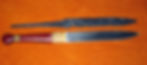
A Replica Seax alongside its historical counterpart
As the design of the seax develops, it generally trends towards being heavier, longer, wider, and thicker. For hidden blade combat, I’d recommend something similar to a heavy seax. While the hidden blade obviously can’t be too heavy, giving it a bit of heft will allow the user to block and parry incoming blows without sustaining serious injury. For more stealthy players, I think the narrow seax is the best option. With the thinness of the blade, parrying and blocking won’t be an option, but precision counter kills would be. This means animations similar to AC1, where the protagonist dodges out of the way and then kills the enemy in one swift blow. Assassinations would work the same as in Shadows, with Hidden Blades suited for combat making being more brutal and noisy than those that are designed for stealth.

Naoe’s Hidden Blade - Ubisoft
Length is also important when discussing the hidden blade. We don’t have official dimensions but Altair and Ezio’s blades seem the right length. In contrast, Basim’s is pitifully short. His blade has the right stabbing profile, but it likely couldn’t penetrate deep enough to kill. Naoe and Connor’s blades also seem shorter than necessary. However, being able to pivot them could offset this, especially with the Tanto profile of Naoe’s blade, which is built to thrust down at a 45-degree angle.

Concept art for Mirage’s Hidden Blade - Ubisoft
This overhaul of both the combat and hidden blade systems would, in my opinion, give new life to the hidden blade, which has been stagnating for years, and help people really connect with Assassin’s Creed by making it their own, something which the franchise hasn’t really done before in this way.
If you enjoyed this article, then be sure to follow Scholars of the Creed on Twitter and Bluesky for more content on the art, history and science of the Assassin's Creed universe.
Safety and peace be upon you.