- Feb 4
- 5 min read
The Life-Giving Sword:
The Subtle Legacy of Shinkage-Ryu in Assassin’s Creed Shadows
Written by Adam
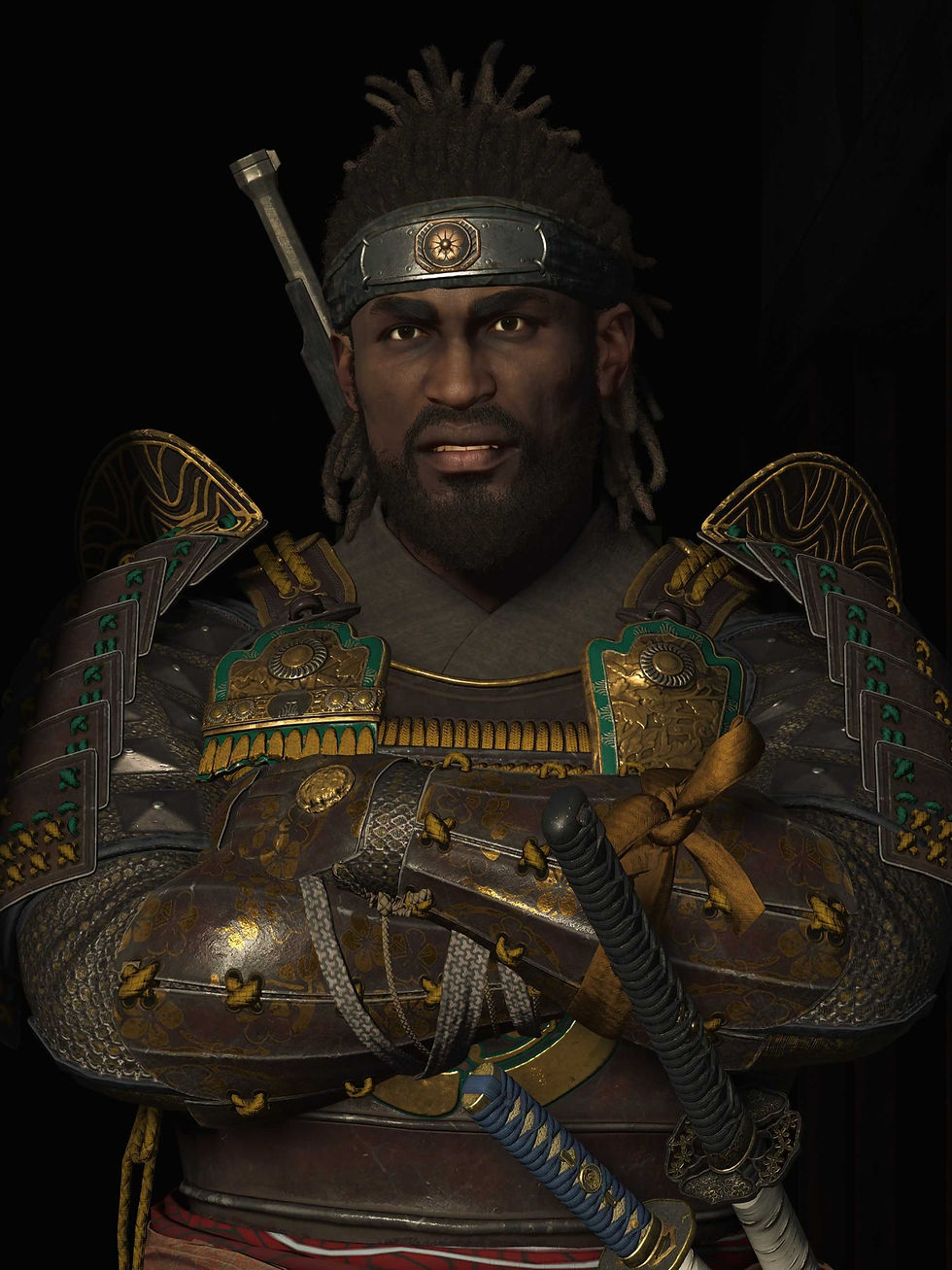
Introduction
Since the very first iteration of Assassin’s Creed, one of its core ideas is that of legacy - Lessons learned passed from generation to generation, knowledge passed from ancestor to descendant, all in the hope that future generations would be able to halt the Templar threat once and for all, and save the world from a second catastrophe. There are obvious instances of this: the transfer of skills and knowledge from Ezio and Altair to Desmond, and the Isu’s attempts, no matter how cryptic, to prevent the disaster that almost wiped their civilisation off the map.
But I’m not here to talk about that. I’m here to discuss a more subtle instance of Assassin’s Creed playing with the concept of legacy. One that you might only notice if you know the history surrounding it. Here, watch this short video:
While this dialogue clip doesn’t mention it directly, it alludes to the fact that, historically, Munetoshi will inherit his and Yasuke’s Sensei’s Shinkage-Ryu and evolve it into the more well-known Yagyu Shinkage-Ryu. But first, we must understand what Shinkage-Ryu is and how Munetoshi became a student of Nobutsuna-Sensei.
What is Shinkage-Ryu?
To put it simply, Shinkage-Ryu is a sword style devised by Kamiizumi Nobutsuna, then known as Fujiwara-no-Hidetsuna. Unlike styles that focus on power and dominance, it emphasises fluidity and adaptability rather than the rigid killing techniques of the era's comparative styles. In this, it promotes a philosophy of peace and the avoidance of unnecessary conflict. “The techniques of Shinkage Ryu are unbeatable,” he said. “This arises not from the needless taking of life, but from the true courage required to avoid unnecessary conflict.”
This is demonstrated by Yasuke himself, both in the way he fights and also in his actions throughout Assassin’s Creed Shadows. His stance during combat, Hassō-no-kamae, while foundational, is no less effective in responding to any situation from any direction; hence the name: eight-direction stance.

Yasuke in combat - Assassin’s Creed Shadows
It allows for rapid, powerful diagonal cuts and 360-degree awareness. In Shinkage-Ryu, it is also known as the wood stance, as mentioned in my previous article. This is because the stance resembles a tree. It’s the perfect stance for Yasuke, as it is strong, unwavering and aligns with his personality. Key aspects of Hassō-no-kamae, often referred to as "migi no kamae" (right-hand position), include the sword standing upright, with the blade angled slightly backwards and the hilt in front of the right shoulder.

A different angled look at Hassō-no-kamae - Assassin’s Creed Shadows
It is advantageous in that it hides the actual distance of the blade’s reach. It can make it difficult for the opponent to judge the correct striking distance, allowing for an opportunity to counterattack. It’s also considered a relaxed stance in traditionalist circles that allows someone to engage in prolonged combat without getting fatigued. Furthermore, it is particularly suitable in indoor settings, where the overhead Jōdan-no-kamae would be impractical.

Shinkage-Ryu’s kesa-giri (rapid cuts) in action - Assassin’s Creed Shadows
In addition, Nobutsuna created the hikihada-shinai, a bamboo sword encased in a leather scabbard. Before this innovation, practitioners had to use unsharpened or wooden swords (bokken). This meant they had to stop or pull their strikes to avoid hurting themselves or their sparring partners. With the hikihada-shinai, it was possible to train at full power and intensity without injury. Furthermore, it is the predecessor to the modern kendo shinai.

An example of the Fukuro-Shinai
Meeting Munetoshi
During his travels across Japan, Nobutsuna had many adventures and encounters. One such incident is well-known and adapted by the legendary Japanese filmmaker Akira Kurosawa as the opening of his equally legendary jidaigeki, Seven Samurai. If you would like to read more about this incident, see The Priests of Myokyo Temple. Many elements of this story highlight Nobutsuna’s emphasis on his philosophy of peace and what he called ‘The Life-Giving Sword.’
The year was 1564, and Nobutsuna had requested a friendly duel with any swordsman in the Nara area. A young, talented swordsman named Yagyu Munetoshi would oblige and was easily defeated three times. Munetoshi then implored Nobutsuna to become his disciple, to which Nobutsuna agreed. Nobutsuna stayed in Yagyu Village to teach Munetoshi for a year before departing for Kyoto. During this, he had left Munetoshi to research the concept of Muto-dori or (no sword). In essence, dealing with an armed opponent when you yourself are unarmed.

Yagyu Munetoshi - Assassin’s Creed Shadows
After a year or so had passed, Munetoshi showed his learnings to Nobutsuna and impressed his sensei, earning him an inka-jo (a certificate of highest attainment) and the right to teach Shinkage-Ryu. This would mark the beginning of the lineage of Yagyu Shinkage-Ryu, which would go on to become the most famous and recognisable swordmanship style in Japanese history.
Legacy and Impact
The legacy of Nobutsuna and his disciple, Munetoshi, is plain for all to see. Nobutsuna’s Shinkage-Ryu became the progenitor of the most famous swordmanship style in Japanese history, created by his own student, Munetoshi, and revolutionised and made safer sword training. Munetoshi’s Yagyu Shinkage-Ryu became the official sword style of the Shogunate, and even now, it’s prominently featured in many Chanbara and Jidaigeki media, both factual and fictitious.
Perhaps most notably, Yagyu Jubei Mitsuyoshi (the son of Munenori, the fifth son of Munetoshi) was banished from court for insulting his childhood friend, Shogun Tokugawa Iemitsu. There is no record of his whereabouts or activities for 12 years, leading to rumours that he was the Shogun’s spy.

Shogun Tokugawa Iemitsu
The Living Legacy of the Blade
The inclusion of Munetoshi and the teachings of Shinkage-Ryu in Assassin’s Creed Shadows is more than just a nod to historical accuracy; it is a profound exploration of the series' central theme of legacy. By connecting Yasuke’s journey to the lineage of Nobutsuna, the game highlights how a philosophy of peac the "Life-Giving Sword" endures across centuries of conflict.
The impact of these historical figures is still felt today through:
Training Innovations: Nobutsuna’s development of the hikihada-shinai facilitated modern Kendo, enabling practitioners to train at full intensity without the risk of lethal injury.
The Yagyu Lineage: Munetoshi’s evolution of the style into Yagyu Shinkage-Ryu secured its place as the official sword style of the Shogunate and a staple of Japanese martial arts history.
Cultural Endurance: From the cinematic homages of Akira Kurosawa to the mysterious legends of Yagyu Jubei, the spirit of the Shinkage-Ryu continues to captivate audiences in both fact and fiction.
As Yasuke adopts the Hassō-no-kamae stance—unwavering and adaptable—he embodies the very essence of a style that seeks to end a fight before it even begins. In the world of Assassin’s Creed, where the struggle for the future is constant, the legacy of the Yagyu clan serves as a reminder that the most potent weapon isn't always the one that takes a life, but the one that preserves it.
If you enjoyed this article, then be sure to follow Scholars of the Creed on Bluesky for more content on the art, history and science of the Assassin's Creed universe. Safety and peace be upon you.